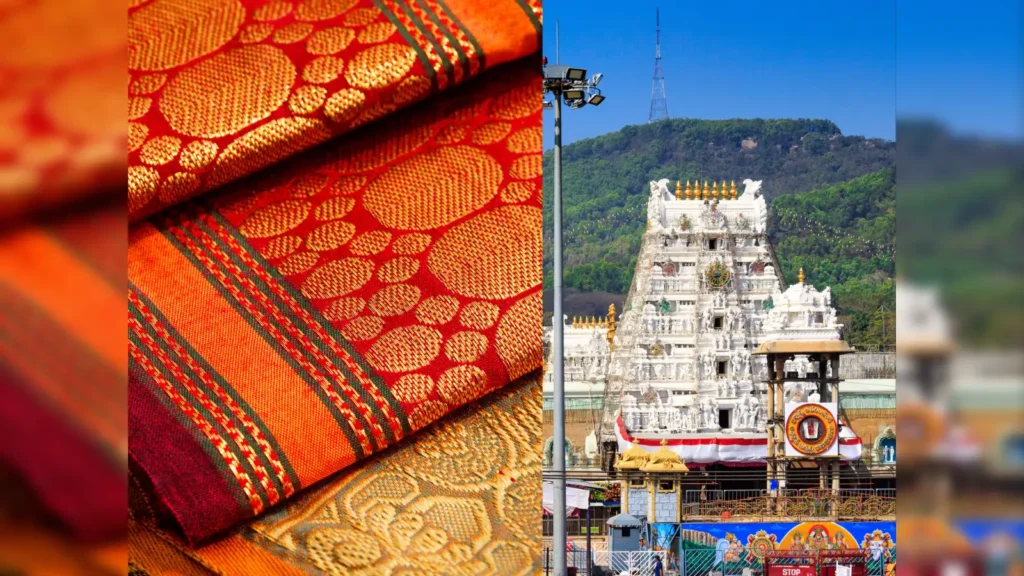
Tirumala polyester dupattas sold as silk scam An alleged procurement irregularity involving the supply of polyester dupattas in place of pure silk has emerged at the Tirumala Tirupati Devasthanams (TTD), the statutory trust responsible for managing the Tirumala temple in Andhra Pradesh. Preliminary findings indicate that the issue may have persisted for several years, resulting in an estimated financial loss of ₹54–55 crore.

Background of the Procurement
TTD annually procures large quantities of silk dupattas for ceremonial use and distribution to devotees, donors, and dignitaries as part of temple rituals. The temple traditionally uses dupattas made of pure mulberry silk as part of its religious and cultural practices. Due to the high cost of silk, the trust conducts procurement through a formal tendering process with strict technical and quality specifications
Allegations and Quality Verification
According to officials, irregularities were suspected after internal vigilance reviews flagged inconsistencies in fabric quality.
Samples were subsequently sent to the Central Silk Board, a statutory body under the Ministry of Textiles, Government of India, for laboratory testing.
Laboratory reports reportedly confirmed that the tested samples contained no silk content, indicating that the material used was polyester, a synthetic fiber significantly cheaper than natural silk.
Tender Requirements and Violations
As per the tender documents, suppliers were required to meet the following conditions:
- Fabric composed of 100% pure mulberry silk
- Compliance with prescribed thread count, weight, and approved designs
- Inclusion of religious inscriptions such as “Om Namo Venkatesaya” in Telugu and Sanskrit
- Use of official TTD symbols, including Sanku, Chakra, and Namam
- Mandatory Silk Mark certification, issued by the Silk Mark Organisation of India
Vigilance officials stated that the supplied dupattas failed to meet multiple criteria. Most lacked Silk Mark tags, and all laboratory-tested samples were found to be polyester.
Financial Implications
Despite using synthetic material, the supplier reportedly billed each dupatta at approximately ₹1,389, a price consistent with genuine silk product.
Based on procurement volumes over the years, investigators estimate that the supplier may have gained nearly ₹54.95 crore by allegedly charging silk rates for non-silk fabric.
Administrative and Legal Action
Following the findings, TTD immediately suspended further supplies from the concerned vendor and initiated a detailed internal investigation. Officials have also indicated that they are re-examining earlier quality approvals, raising questions about oversight mechanisms and possible procedural lapse.
The Andhra Pradesh Anti-Corruption Bureau (ACB) has taken over the investigation. The agency will examine
- Whether there was collusion between officials and the supplier
- How the materials passed quality inspections over multiple years
- Why the same supplier continued to receive contracts
- Whether certification or documentation was misrepresented
Broader Implications
Officials have noted that the case highlights systemic weaknesses in procurement monitoring and quality verification processes. Experts have pointed out that large public institutions require regular third-party audits and stricter compliance checks to prevent such lapses.
The investigation remains ongoing, and further action will be based on the findings of the ACB and other oversight bodies.
Calls for Stronger Procurement Oversight
Governance experts emphasize that large public and religious institutions must continuously monitor procurement systems, especially when they renew high-value contracts over multiple years
Experts increasingly recommend regular third-party quality audits, random sampling during supply cycles, and digital tracking of certification documents as standard safeguards.
In recent years, several government bodies across India have moved toward centralized e-procurement platforms and real-time verification of quality certifications to reduce the risk of fraud and material substitution.
Experts say similar mechanisms could help prevent recurrence of such issues at temple trusts and other autonomous institutions.
Impact on Institutional Trust
While the investigation focuses on financial and procedural accountability,
officials have acknowledged that the issue also affects public confidence in institutional processes.
Officials consider transparency in procurement and timely disclosure of findings essential to restoring trust among stakeholders, including devotees and donors
TTD authorities have indicated that corrective measures, including revisions to procurement guidelines and stricter compliance checks, are under consideration.
Any disciplinary or legal action will depend on the conclusions reached by investigative agencies.
Next Steps
The Andhra Pradesh Anti-Corruption Bureau will submit its preliminary findings after examining procurement records, tender documents, quality certification files, and financial transactions linked to the supplier
If authorities establish violations of procurement norms or corruption laws, they will initiate further action under relevant legal provisions.
Officials have stated that the outcome of the probe could lead to broader reforms in procurement practices, not only within TTD but also across other public and religious institutions that manage large-scale supply contracts.
The case continues to be observe as authorities work to determine accountability and implement safeguards aimed at strengthening transparency and governance.


- About Us – Facts Beyond Border (FBB)
- Contact us
- Declaration
- Privacy Policy
- Term and conditions
- Write For FBB
- Aviation
- Aviation News
- Bollywood legal news
- Business and economy
- Crime / Scams
- current affairs
- Cybersecurity / Technology News
- Daily Updates
- Delhi High Court News
- Delhi news
- education policy
- Entertainment
- Global Affairs
- global economy
- Health / Medical News
- india news
- Indore News
- international news
- law and policy
- Maharashtra politics
- Media and society
- national news
- News and Current Event
- politics
- Politics and culture
- Politics and Law
- society and culture
- sports
- Technology / Social Media News
- Technology & Society
- Trending and Politics
- Trending and Politics
- Trending and technology
- Uncategorized
- Weather / Natural Disasters
- world news
- World News / International News
- Trump Says War with Iran Could Last Four Weeks History Disagrees
- From Kerala to Keralam: Heritage Move or Hidden Agenda?
- IIT Bombay Security Alert: College Dropout Arrested After Live Bullets Found in Hostel
- The Arrest of Andrew Mountbatten-Windsor: A Deep Look at the UK Scandal Rocking the Royal Family
- Italy Cricket Team’s T20 World Cup Hero Crishan Kalugamage Once Worked at a Pizza Shop