Indore water contamination
Indore, widely known for its cleanliness rankings, is grappling with a serious drinking water contamination crisis
after several residents of the Bhagirathpura area fell ill due to polluted municipal water supply.
The incident has triggered concerns over water quality monitoring,
public health safety, and civic infrastructure management in Madhya Pradesh’s commercial capital.
Reports of illness and alleged fatalities linked to contaminated water have prompted administrative action, political visits, and a detailed investigation into the Indore municipal water supply system.
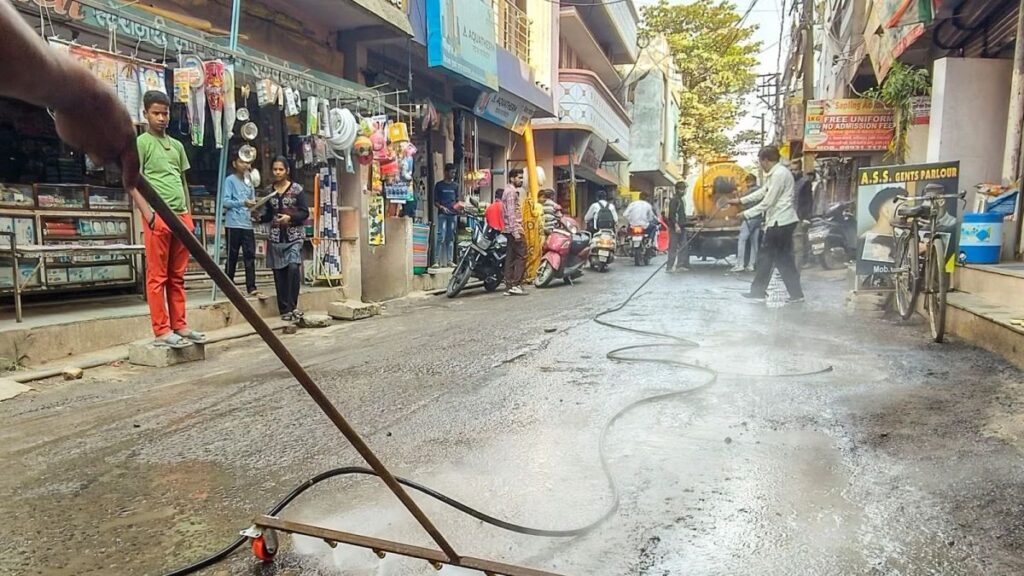
According to local accounts, residents of Bhagirathpura began experiencing health issues after consuming tap water supplied through municipal pipelines.
People reported symptoms such as severe diarrhoea, vomiting, stomach pain, dehydration, and weakness, indicating the spread of waterborne diseases.
Several households stated that the water had an unusual smell and appearance in the days leading up to the incident.
Locals allege that complaints were made to civic authorities earlier, but corrective measures were not implemented in time.
While unofficial figures circulated on social media suggested multiple deaths, authorities are still verifying the exact number of fatalities and causes.
Health Impact and Medical Emergency Response
Hospitals and local health centres in Indore witnessed a sudden influx of patients from Bhagirathpura.
Medical teams provided immediate treatment, including intravenous fluids, antibiotics where required, and continuous monitoring of patients.
The health department deployed emergency response teams to prevent further escalation and to identify individuals showing early symptoms.
Officials described the situation as a public health emergency, especially due to the dense population of the affected area.
Children, elderly residents, and people with pre-existing conditions were identified as high-risk groups and received priority medical attention.
Political Visit and Public Reaction
Following the incident, BJP leader Akash Vijayvargiya visited Bhagirathpura to assess the ground situation and interact with affected families.
His visit came amid rising public anger over the alleged failure of civic authorities to ensure safe drinking water.
Residents voiced concerns about the condition of pipelines, irregular water testing, and delayed response despite repeated complaints.
The issue quickly turned into a political flashpoint, with opposition leaders demanding accountability and transparency from the Indore Municipal Corporation.
Government Action and Investigation
The Madhya Pradesh government ordered an immediate investigation into the water contamination incident.
District officials collected water samples from multiple points in the affected area and sent them for laboratory testing.
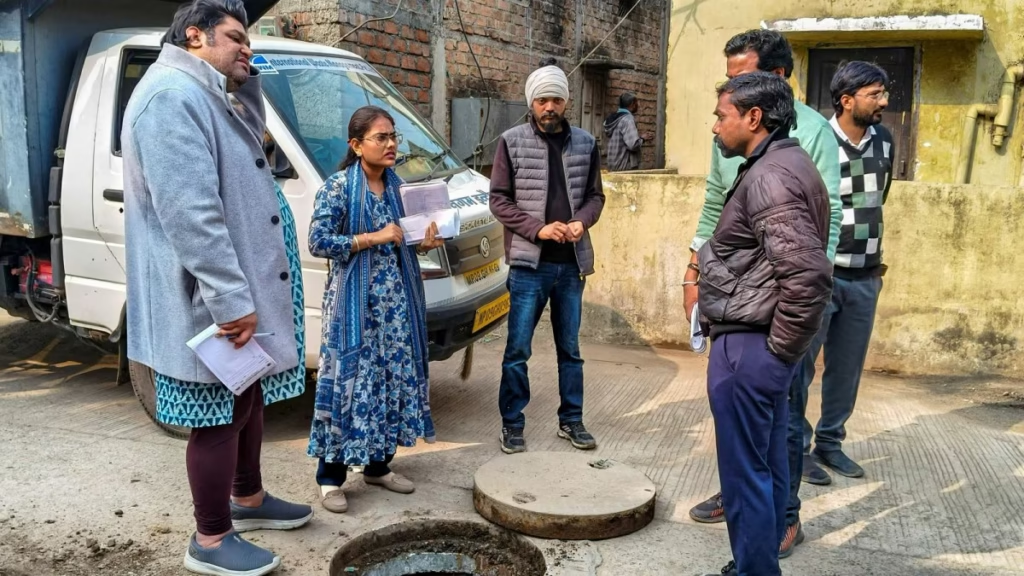
Preliminary assessments suggest that sewage leakage or damaged pipelines may have caused contamination of drinking water lines.
Authorities also inspected nearby drainage systems and aging water infrastructure.
As a precautionary measure, officials temporarily stopped the regular water supply in Bhagirathpura and arranged water tankers and alternative clean drinking water sources for residents.
The administration assured strict action against any negligence found during the investigation.
The Bhagirathpura incident has reignited broader concerns about urban water infrastructure, pipeline maintenance, and water quality surveillance in Indore.
Despite the city’s reputation for cleanliness, experts point out that underground water pipelines require constant monitoring and timely upgrades.
Public health specialists emphasize that routine water testing, real-time contamination alerts, and rapid grievance redressal mechanisms are critical to preventing such tragedies.
They also stress the importance of coordination between municipal bodies, health departments, and disaster response teams.
For residents of Bhagirathpura, the incident has caused fear, disruption, and loss of trust in the municipal water supply.
Many families are now relying on bottled water or tankers, increasing daily expenses and inconvenience.
Urban planners note that rapid population growth, aging infrastructure, and climate-related stresses make
safe drinking water management a growing challenge for Indian cities. Without sustained investment and accountability, similar incidents could recur in other localities.
The Indore water contamination tragedy in Bhagirathpura highlights the critical need for robust water safety systems, transparent civic governance, and proactive public health measures.
While emergency steps have helped control the immediate crisis, long-term solutions will depend on infrastructure upgrades, strict monitoring, and timely response to public complaints.
As investigations continue, the incident serves as a reminder that access to clean and safe drinking water remains a fundamental necessity that requires constant vigilance and responsible administration.

- Aviation
- Aviation News
- Bollywood legal news
- Business and economy
- Crime / Scams
- current affairs
- Cybersecurity / Technology News
- Daily Updates
- Delhi High Court News
- Delhi news
- education policy
- Entertainment
- Global Affairs
- global economy
- Health / Medical News
- india news
- Indore News
- international news
- law and policy
- Maharashtra politics
- Media and society
- national news
- News and Current Event
- politics
- Politics and culture
- Politics and Law
- society and culture
- sports
- Technology / Social Media News
- Technology & Society
- Trending and Politics
- Trending and Politics
- Trending and technology
- Uncategorized
- Weather / Natural Disasters
- world news
- World News / International News
- Trump Says War with Iran Could Last Four Weeks History Disagrees
- From Kerala to Keralam: Heritage Move or Hidden Agenda?
- IIT Bombay Security Alert: College Dropout Arrested After Live Bullets Found in Hostel
- The Arrest of Andrew Mountbatten-Windsor: A Deep Look at the UK Scandal Rocking the Royal Family
- Italy Cricket Team’s T20 World Cup Hero Crishan Kalugamage Once Worked at a Pizza Shop