
On December 16, 2025, a Delhi court dismissed the Enforcement Directorate’s (ED) complaint against senior Congress leaders Rahul Gandhi and Sonia Gandhi in the National Herald case, citing non-compliance with mandatory legal requirements under the Prevention of Money Laundering Act (PMLA).
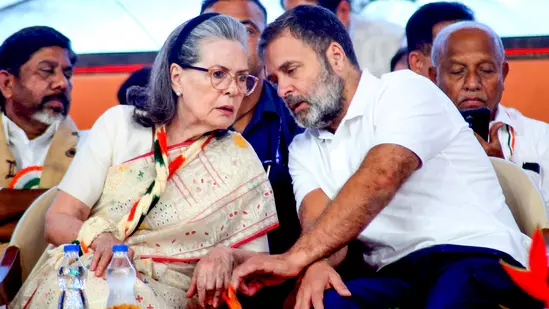
The ruling provided procedural relief to the accused without addressing the merits of the allegations.
Special Judge Vishal Gogne of the Rouse Avenue Court, which handles economic offence cases, passed the order.
The court ruled that the Enforcement Directorate’s complaint was not maintainable under the Prevention of Money Laundering Act (PMLA)
because it lacked a registered First Information Report (FIR) for a scheduled offence, a mandatory legal requirement to initiate money-laundering proceedings
Court’s Findings on Jurisdiction
The court observed that under the PMLA, the ED can investigate or prosecute money-laundering offences only
when there is an underlying predicate offence listed in the Schedule to the Act, supported by a duly registered FIR.
The FIR acts as the jurisdictional trigger for the ED to exercise its powers.
In the present case, the court noted that no FIR had been registered against Rahul Gandhi, Sonia Gandhi,
or Young Indian Private Limited, the company central to the case. As a result, the ED lacked the jurisdiction required to proceed under the PMLA.
Instead of relying on an FIR, the ED based its complaint on a private criminal complaint filed in 2012 by BJP leader Subramanian Swamy.
The court held that a private complaint, by itself, does not satisfy the legal threshold required to initiate proceedings under the PMLA.
Consequently, the ED’s complaint failed to meet the statutory conditions necessary for prosecution.
Background of the National Herald Case
The National Herald case concerns Associated Journals Limited (AJL),
the publisher of the National Herald newspaper, and Young Indian Private Limited,
a company in which Rahul Gandhi and Sonia Gandhi hold a majority stake.

The case involves allegations that Young Indian acquired AJL’s assets through a series of transactions that resulted in financial irregularities.
The ED has alleged that these transactions caused an estimated loss of over ₹2,000 crore,
claiming that AJL’s shares were transferred improperly, enabling Young Indian to gain control over valuable real estate assets owned by AJL.
The agency has classified these transactions as proceeds of crime under the PMLA.
However, the court clarified that these allegations, regardless of their nature, cannot be examined under the PMLA framework unless the foundational legal requirement of a scheduled offence supported by an FIR is fulfilled.
Scope of the Court’s Order
The court emphasized that its decision does not absolve the accused of wrongdoing on merit.
The dismissal strictly addresses a procedural defect—namely, the absence of an FIR for a scheduled offence. The judge stated that evaluating evidence or substantive allegations would be legally impermissible without first establishing jurisdiction under the PMLA.
The ruling reinforces the principle that statutory safeguards and procedural compliance are integral to criminal prosecution,
particularly in cases involving economic offences and money laundering.
Legal Implications
Legal observers note that the judgment reiterates the importance of strict adherence to procedural requirements under the PMLA.
The Act grants wide investigative powers to enforcement agencies, but courts have consistently held that such powers must be exercised within the boundaries set by law.
The ED retains the option to challenge the ruling before a higher court or initiate fresh proceedings if it ensures compliance with statutory requirements, including the registration of a valid FIR for a scheduled offence.
Political and Legal Context
The ruling has drawn attention due to the political prominence of the individuals involved.
While Congress leaders have described the decision as affirmation of due process,
opposition parties have stated that the National Herald matter remains subject to further legal proceedings.
Conclusion
The Delhi court’s dismissal of the ED’s complaint in the National Herald case underscores the judiciary’s role
in enforcing procedural legality in money-laundering cases.
The case continues to remain significant within India’s legal and political landscape,
highlighting the balance between investigative authority and statutory safeguards under economic offence laws.

- •
- adiala jail
- afghanistan pakistan border tension
- Air pollution in delhi
- Air quality crisis
- Airport security
- AK-47 found
- Al-Falha University news
- Aloknath
- American politics headlines
- Aravalli environmental protection
- Aravalli forests
- Aravalli Hills
- Assam land controversy
- aus
- australia
- Australia shooting
- Aviation safety
- bali volcano
- balochistan
- Bangladesh
- Bangladesh Election Result 2026
- Bengaluru airport GPS
- bengaluru rape case
- Bhagirathpura water crisis
- Bhavish AGGARWAL
- bihar
- Bihar election Results
- bihar elections
- Bihar Elections 2025
- Bihar Vote Count
- Bilateral trade
- bjp
- BJP Shinde Alliance
- BJP vs Congress
- BMC Election Results
- Bollywood
- bomb blast
- Brain temple device
- breaking news
- Budget 2026
- cambodia
- car blast delhi
- caste bias
- caste discrimination
- ceasefire
- Children health and pollution
- china politics
- Chirag Paswan
- comedian kunal kamra
- congress party
- cough syrup deaths
- Crishan Kalugamage
- Current affairs India
- Custom seizure
- Cybersecurity
- cyclone
- cyclone ditwah
- daily news
- death penalty
- Deepinder Goya
- Delhi air pollution
- Delhi air quality
- Delhi airport
- Delhi airport GPS
- Delhi alert
- Delhi AQI today
- Delhi Blast news
- Delhi CM
- Delhi crime update
- Delhi explosives case
- DELHI GOVT
- Delhi HC alimony ruling
- Delhi Metro
- delhi new district
- Delhi news
- delhi news today
- delhi police
- Delhi pollution
- Delhi pollution news today
- delhi pollution protest
- Delhi Red Fort blast
- Delhi smog crisis
- Delhi Terror Alert
- DGCA
- DGCA penalty on IndiGo
- Dhaka
- Dhaka court
- Dharmendra death'
- Dharmendra deol
- DHS work permit
- Digital Culture
- dima hasao.
- diwali2025
- Doctor arrested
- donald trump
- Donald Trump on world peace
- Donald Trump peace statement
- Dr Muzamil Shakil
- Droupadi Murmu
- durand line dispute
- echnology Ethics
- economy
- election
- Election Commission of India
- Electoral Transparency
- Environmental conservation India
- ethiopia volcano
- ethiopia volcano eruption
- Explosives seized near Delhi
- fake silk
- Fake Voters Controversy
- Family law India
- Faridabad terror case
- FBB
- fbbdaily
- FIR
- fire cracker
- Fortress Europe
- Gold price india
- Gold smuggling
- GPS
- GPS spoofing
- guwahati high court
- H-1B Visa
- H-4 EAD rule
- H-Files
- Haryana Election 2025
- High Court maintenance order
- Horror comedy genre
- Human rights in Europe
- hyper nationalism
- ICC T20 World Cup
- IIT Bombay
- IIT Bombay hostel incident
- IIT Bombay security breach
- imran khan
- india
- INDIA AUSTRALIA highlights
- india GPS spoofing
- india pakistan relation
- INDIA vs AUS
- Indian airport news
- Indian Economy
- indian elections
- indian export
- Indian Politics
- Indians in US
- IndigGo Airlines
- IndiGo
- indiGo flight Cancel
- IndiGo flight delay
- Indore municipal water supply
- Indore water contamination
- Instagram data leak
- International Security
- IPS Y.Puran kumar
- Iran protests 2026
- IRCTC share price today
- IRCTC shares NSE BSE
- IRCTC stock
- Italy Cricket Team
- Jammu and Kashmir doctors
- JFK Airport Mystery
- kapil sharma
- kathmandu
- Kerala to Keralam
- kerela
- kunal kamra
- kunan kamra RSS tshirt
- Madhya Pradesh news 2025
- Madhya Pradesh public health
- Mahabal cement
- Maithili thakur
- Map controversy
- Mardaani 3
- Medicine quality control India
- Medicine safety regulations India
- Meta
- metro renaming
- Middle East protests
- Migration in Europe
- missing children data controversy
- modi controversy
- money laundering
- Mumbai airport GPS
- Mumbai BMC Election 2026
- Mumbai crime news
- Mumbai Politics
- MUSTAFABAD
- narendra modi
- National security
- nationalism in india
- Nationwide protests in Iran
- NDA Leads
- Nepal
- Nepal currency
- New DElhi
- New South Wales shooting
- Nirmala Sitharaman
- Nonexistent Country
- NSW Police
- odisha
- Ola electric
- Online privacy
- pakistan
- pakistan afghanistan 2025
- panjab university
- Passenger impact
- pitampura stations
- PMLA
- PoK and Aksai Chin
- Police investigation
- Political analysis
- Political controversey
- political polarisation
- poverty
- Prabhas
- president
- Prince Andrew arrest 2026
- protest
- public anger
- Rahul Gandhi
- Rajpal Yadav cheque bounce case
- Rajpal Yadav legal case
- Rajpal Yadav surrender
- rape case
- Red EcoSport car hunt
- Red Fort
- red fort attack 2025
- red fort blast
- Red Fort Blast case
- Refugee crisis Europe
- Rekha Gupta
- republic day security
- Room 13 Al-Falha University
- russia trade boost
- sajeeb wazed
- salman khan
- salmankhan news
- Scam
- Section 125 CrPC
- Sheikh hasina
- shreyas talpade
- sixth schedule
- Social Issues
- social media
- social media ban
- social media politics
- sonia gandhi
- sri lanka
- st/sc
- Stock market news India
- strike
- student protest
- suicide case
- Supreme Court Aravalli ruling
- swiggy
- T series modi song
- tariff cut
- Tarique Rahman.
- Tax Policy
- terror alert
- thailand
- thailand defence
- Thailand launches air strike
- The HE Man
- The Raja Saab
- The Raja Saab movie
- Tirumala
- tirumala allegation
- Torenza Passport
- toxic work culture
- trade deal
- Travel news
- Trending news India
- tribal community
- Trump
- Trump administration
- TTD scam
- U.S.
- UGC Act 2026
- UGC Equity Rules Anti-Discrimination Policy
- UGC Regulations
- UK breaking news
- UK News
- Union Cabinet decision
- UP POLITICS
- US Government
- US immigration 2025
- US Politics
- UTTAR PRADESH
- Viral News 2025
- Voter Fraud Allegations
- Wahington news
- Wearable brain technology
- West Bengal politics
- WhatsApp security
- women protection
- women rights
- women safety
- YOGI ADITYANATH
- Youth voter trends
- zomato
- Zomato CEO
- Aviation
- Aviation News
- Bollywood legal news
- Business and economy
- Crime / Scams
- current affairs
- Cybersecurity / Technology News
- Daily Updates
- Delhi High Court News
- Delhi news
- education policy
- Entertainment
- Global Affairs
- global economy
- Health / Medical News
- india news
- Indore News
- international news
- law and policy
- Maharashtra politics
- Media and society
- national news
- News and Current Event
- politics
- Politics and culture
- Politics and Law
- society and culture
- sports
- Technology / Social Media News
- Technology & Society
- Trending and Politics
- Trending and Politics
- Trending and technology
- Uncategorized
- Weather / Natural Disasters
- world news
- World News / International News
- From Kerala to Keralam: Heritage Move or Hidden Agenda?
- IIT Bombay Security Alert: College Dropout Arrested After Live Bullets Found in Hostel
- The Arrest of Andrew Mountbatten-Windsor: A Deep Look at the UK Scandal Rocking the Royal Family
- Italy Cricket Team’s T20 World Cup Hero Crishan Kalugamage Once Worked at a Pizza Shop
- Bangladesh Election Result 2026 Live: BNP Leads Big in Dhaka as Tarique Rahman Poised to Become PM





[…] Delhi Police have urged citizens to stay alert, report any suspicious activity, and contribute responsibly to the city’s overall security framework. […]