DGCA penalty on IndiGo :When India’s aviation regulator fines the country’s largest airline ₹22.2 crore, it is never just about money.
It is about trust, safety, and the invisible people who keep flights moving long before passengers buckle their seatbelts.
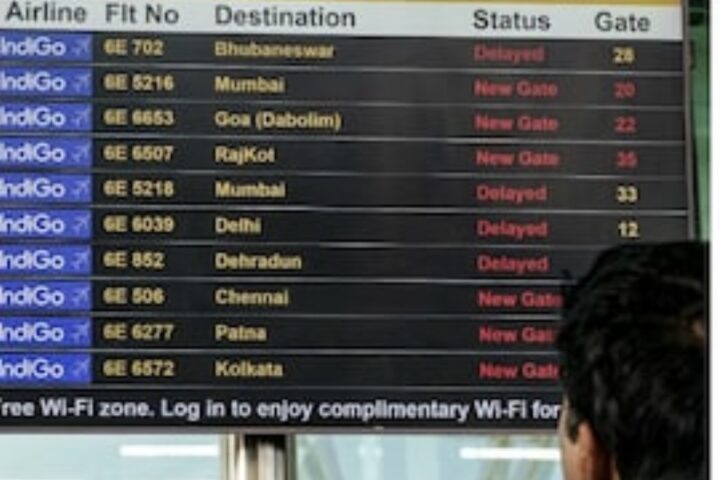
The Directorate General of Civil Aviation (DGCA) has penalised IndiGo after an inquiry found that repeated flight cancellations were linked to overstretched crew operations.
In simple words, pilots and cabin crew were being pushed close to the edge of permissible limits, leaving little room for disruption, fatigue recovery, or basic human error.
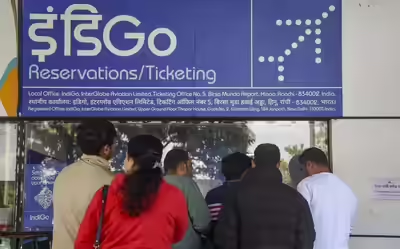
At first glance, cancellations feel like an inconvenience. Missed meetings. Missed weddings.
Long nights at airports. But dig deeper, and a more uncomfortable picture emerges.
Aviation is not forgiving. Fatigue is not a minor issue. And when crew schedules stretch too thin, the system starts cracking quietly.
What the DGCA Found
The regulator’s inquiry revealed a pattern.
Flights were getting cancelled not because of weather or technical glitches alone, but because crew were unavailable at the last moment.
This happened when pilots or cabin crew hit mandatory duty limits or reported fatigue.
In aviation, these limits exist for one reason: safety.
IndiGo’s model thrives on tight turnarounds and high aircraft utilisation.
It has worked brilliantly for years, helping the airline dominate the domestic market.
But the DGCA clearly felt that efficiency had crossed into excess.
Crew were rostered in a way that left almost no buffer.
A small delay in one sector cascaded into cancellations elsewhere.
And when crew finally reached their legal duty limit, flights had no one to operate them.
Can an airline really afford to run with no breathing room? And should it?
The Human Side of the Cockpit
It is easy to talk about “resources” and “manpower” in corporate language. But pilots and cabin crew are not interchangeable parts.
They are trained professionals carrying hundreds of lives at 35,000 feet.
A pilot finishing a long duty day is not just tired.
They are mentally drained.
Decision-making slows.
Situational awareness dips.
The DGCA’s stance sends a strong signal: pushing crew to the limit might look efficient on spreadsheets, but it comes at a cost that cannot be ignored.
Many crew members across airlines have quietly spoken about stretched rosters, last-minute changes, and pressure to accept duties because cancellations attract penalties.
This fine brings that uncomfortable reality into public view.
And perhaps that is the most important part of the story.
Why IndiGo Matters Here
IndiGo is not a small or struggling airline. It controls more than half of India’s domestic market.
What it does often becomes industry practice. If the market leader normalises razor-thin crew planning, smaller airlines feel compelled to follow.
That is why the DGCA penalty action on IndiGo feels deliberate.
This is not just a punishment; it is a line drawn in the sand.
The regulator made it clear that operational discipline and crew welfare are non-negotiable, regardless of market share or financial performance.
Passengers Pay the Price First
For travellers, the impact is immediate and deeply personal. A cancelled flight is not just a refund or rebooking.
It is missed exams, medical appointments, funerals, and job interviews.
Many passengers affected by recent cancellations reported minimal communication and long waits.
Airlines often argue that cancellations protect safety, which is true.
But passengers are left wondering: why did it reach this point in the first place?
If an airline knows its crew rosters are stretched, should it continue selling seats aggressively?
Should expansion slow down until systems catch up?
These are uncomfortable questions, but necessary ones.
A Message to the Industry
The ₹22.2 crore penalty may not cripple IndiGo financially.
But reputationally, it stings.
More importantly, it warns the entire aviation sector that growth without resilience is risky.
India’s aviation market is booming.
New airports are opening. Passenger numbers are rising. Fleet sizes are expanding fast.
Yet, human capacity does not scale at the same speed as aircraft orders.
Pilots take years to train. Cabin crew need time, rest, and stability. Regulators know this. And now, they are acting on it.
What Happens Next?
IndiGo has said it will review its processes and cooperate with the regulator.
That is expected. But real change will only come if crew planning builds in margins, not just minimum compliance.
Fatigue should not be treated as an exception. It should be assumed, planned for, and respected.
For passengers, this episode is a reminder that cancellations are sometimes the safer outcome.
A delayed or cancelled flight is frustrating, yes. But an exhausted crew in control of an aircraft is far worse.
A Necessary Intervention
This fine feels like a course correction, not an overreach. Aviation safety is built on layers of prevention, and crew welfare is one of the most critical layers.
If airlines want passengers to trust them, they must first show trust in their own people by not stretching them beyond reason.
In the end, this is not just about IndiGo. It is about how India’s aviation growth story balances ambition with responsibility.
Because no matter how competitive the fares or how full the planes, safety begins with rested humans in the cockpit and cabin.
(DGCA penalty on IndiGo)