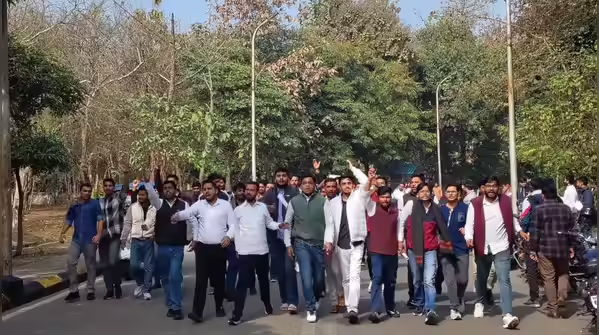
The proposed name change of kerala has ignited a nationwide debate that blends cultural pride with political timing.
After the Union Cabinet approved the proposal to rename Kerala as “Keralam,” supporters celebrated what they call a long-overdue correction.
Critics, however, questioned whether the decision reflects genuine heritage revival or a strategic move ahead of crucial elections.
The discussion over Kerala to Keralam is not new.
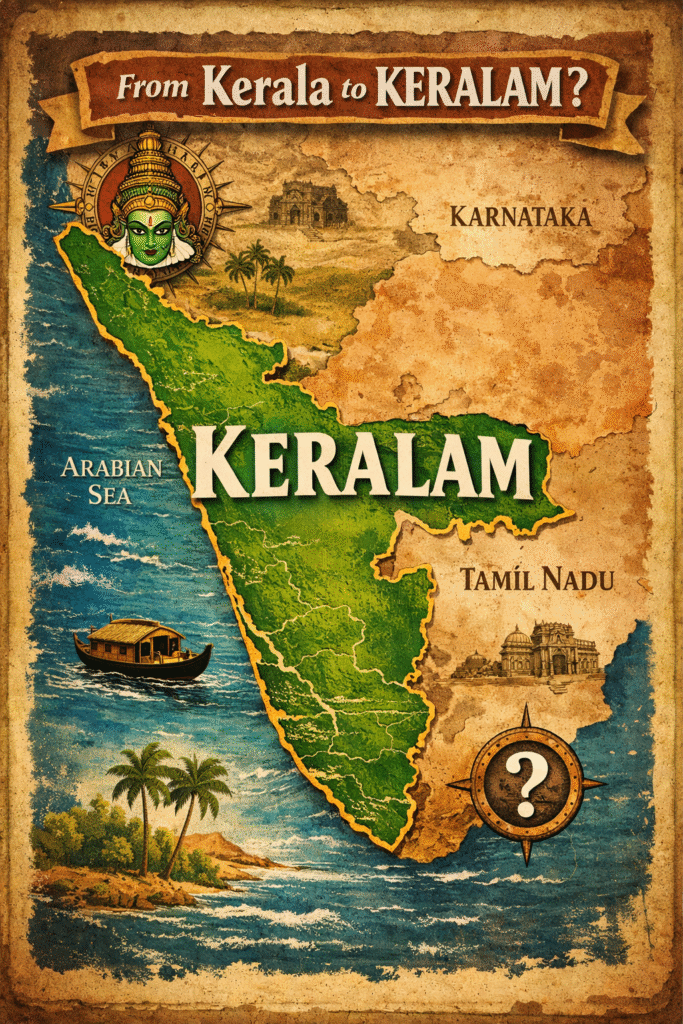
For years, scholars, linguists, and cultural leaders have argued that the state’s official English name does not fully represent its Malayalam linguistic identity.
In Malayalam, residents commonly refer to their state as “Keralam.” The government now wants the constitutional name to reflect that local usage.
Why the Push for Keralam?
Supporters of the Keralam name change say the move restores historical authenticity.
The word “Keralam” appears in ancient texts and inscriptions and carries deep cultural meaning.
Many historians trace the name to early Tamil-Malayalam literature and legends, including references to the mythical origins of the land.
Language experts argue that post-colonial India has slowly corrected Anglicized names of cities and states.
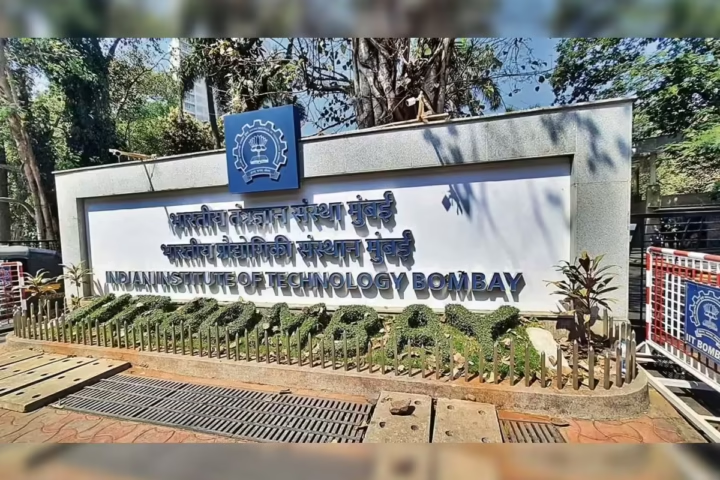
Bombay became Mumbai. Calcutta became Kolkata. Orissa became Odisha.
In that context, changing Kerala to Keralam appears consistent with a broader pattern of linguistic reclamation.
State leaders maintain that the Keralam proposal respects the sentiments of Malayalis worldwide.
They argue that aligning official records with native pronunciation strengthens cultural confidence and regional identity.
Political Timing Raises Questions
While the cultural argument carries weight, critics focus on timing.
Kerala is heading toward Assembly elections, and political observers see the Keralam approval as potentially strategic.
Opponents question whether the renaming debate distracts from pressing issues like unemployment, inflation, and infrastructure challenges.
Political analysts point out that symbolic decisions often gain traction before elections.
A name change may energize regional pride and consolidate voter support.
Some opposition leaders have even compared the Keralam move with pending name change proposals from other states that have not received swift approval.
This political angle fuels the “hidden agenda” narrative.
Detractors ask whether the government prioritized symbolism over policy reforms that directly impact daily life.
Public Reactions Across Kerala
Public opinion on the Keralam name change remains divided.
Many citizens welcome the decision with pride.
For them, “Keralam” represents identity, history, and language.
Social media platforms have seen celebratory messages emphasizing heritage and linguistic authenticity.
At the same time, some residents question whether the change will bring tangible benefits.
They ask practical questions: Will official documents need updating?
Will government signage change?
What will be the cost of administrative adjustments?
Experts clarify that once Parliament passes the necessary constitutional amendment, “Keralam” will replace “Kerala” in official records.
However, implementation may take time, and transitional arrangements will likely allow both names temporarily.
Cultural Significance vs Governance Priorities
The Keralam debate highlights a broader national conversation about identity politics and governance priorities.
In a diverse country like India, language and culture remain powerful forces.
Renaming initiatives often reflect deeper efforts to reclaim historical narratives.
However, governance also demands focus on economic growth, healthcare access, education reforms, and job creation.
Critics argue that symbolic decisions should not overshadow policy-driven development.
Supporters counter that cultural recognition and development are not mutually exclusive.
They insist that acknowledging heritage strengthens social cohesion and fosters pride, which in turn supports long-term progress.
What Happens Next?
The Keralam name change process now moves toward parliamentary approval.
If Parliament passes the amendment, the Constitution will officially recognize “Keralam” as the state’s name.
Government departments, national records, and international references will gradually update accordingly.
Until then, the debate will continue.
Is Keralam a rightful cultural correction that honors Malayalam heritage? Or does the timing suggest political calculation?
The answer likely depends on perspective.
What remains clear is that the Keralam name change has captured national attention.
It reflects how deeply language, identity, and politics intertwine in India’s democratic landscape.
As discussions evolve, the focus will shift from symbolism to implementation and from controversy to consequence.
Whether heritage or hidden agenda drives the move, Keralam now stands at the center of a conversation about culture, power, and public priorities.