Non-Hindu entry ban in Badrinath and Kedarnath temples : The proposed restriction on non-Hindu entry into the Badrinath and Kedarnath temples has reopened an old but unresolved question in India:
how should religious tradition coexist with a modern, plural society?
The discussion began after the Badrinath-Kedarnath Temple Committee (BKTC) indicated that it is considering a rule that would bar non-Hindus from entering temples under its administration.
These include Badrinath and Kedarnath, two of the most significant Hindu pilgrimage sites in the country.
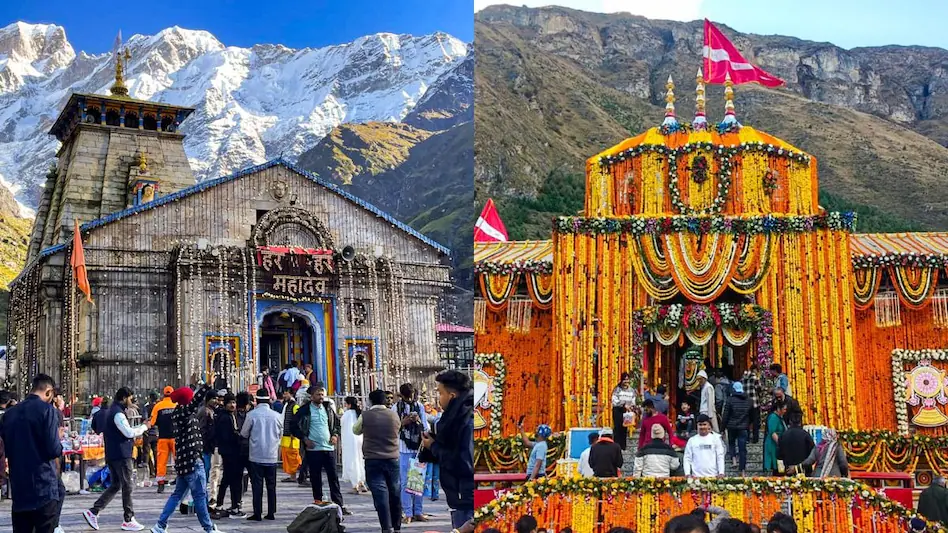
Temple authorities have made their intent clear, even though the rule remains under discussion and has not been formally implemented.
The committee says the move aims to preserve the sanctity of the shrines and ensure that people respect religious practices.
Officials say temples are sacred spaces meant for Hindu worship, and rising tourist footfall without religious intent is diluting their spiritual environment.
From the committee’s perspective, this is not a political decision but a cultural one.
Why Temple Authorities Are Pushing This Rule
Temple officials point to a visible shift in how pilgrimage sites are being used.
Over the past decade, Badrinath and Kedarnath have seen a sharp rise in visitors driven by social media exposure, improved infrastructure, and religious tourism campaigns.
As a result, the temples often witness overcrowding, casual behavior, photography during rituals, and visitors treating the premises as tourist landmarks rather than places of worship.
Temple managers believe restricting entry to Hindus would help control this trend and restore religious discipline.
They also argue that such restrictions are not unique. Several religious institutions across India and the world limit entry based on faith, gender, or ritual purity.
In that sense, they see the proposal as a continuation of tradition, not a new exclusionary policy.
Why the Proposal Has Triggered Debate
The controversy arises because Badrinath and Kedarnath are not private religious spaces.
A statutory body manages them, the state promotes them as major pilgrimage destinations, and public infrastructure and security support them.
Critics argue that once religious institutions become part of state-backed tourism and administration, decisions about access affect public life.
A blanket ban based on religious identity, they say, oversimplifies the issue.
Many point out that disrespectful behavior inside temples is not limited to non-Hindus.
In fact, poor crowd management, VIP culture, and commercialization have contributed more to the loss of sanctity than the presence of visitors from other faiths.
The concern, therefore, is not just about who enters, but how order and discipline are enforced.
Legal and Constitutional Questions
Legally, religious institutions in India enjoy autonomy under the Constitution.
They can manage their internal affairs, including rituals and customs, but this autonomy is not absolute.
Courts have repeatedly held that when state-appointed bodies govern religious institutions, their decisions must align with constitutional values such as equality and non-discrimination.
If authorities formally implement a non-Hindu entry ban, the decision could face legal scrutiny.
The key question would be whether such a restriction is essential to religious practice or whether it crosses into exclusion without sufficient justification.
So far, no one has filed a legal challenge because the rule remains a proposal.
Meanwhile, reactions on the ground remain mixed.
Many local residents support stronger regulation inside temples but are unsure whether religious identity should be the deciding factor.
Shopkeepers, porters, and guides who depend on pilgrimage tourism often say that most visitors behave respectfully, regardless of faith.
What they want is better enforcement of rules, not blanket bans.
Several priests and long-time devotees also argue that exclusion alone cannot protect spirituality.
They say faith shows itself in conduct, not in identity labels.
The Badrinath-Kedarnath debate is part of a wider trend across India where religious institutions are reasserting control over space, access, and identity.
From dress codes to entry restrictions, many shrines are responding to modern pressures by tightening boundaries.
While the intention may be preservation, the risk lies in turning faith into a tool of division rather than devotion.
For now, the proposal awaits formal discussion within the temple committee.
Whether it becomes an enforceable rule will depend on administrative approval, public response, and potential legal review.
What is clear is that this issue goes beyond one temple or one religion.
It reflects India’s ongoing struggle to balance religious tradition, constitutional values, and social harmony.
The outcome will set a precedent—not just for Badrinath and Kedarnath, but for how India defines sacred spaces in a changing society.
(Non-Hindu entry ban in Badrinath and Kedarnath temples)