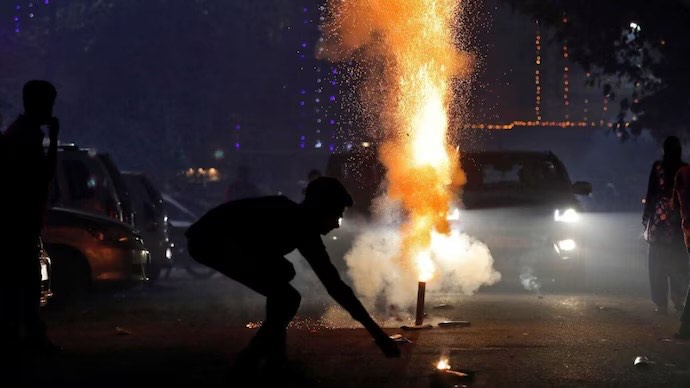
the explosion occurred while attempting to make a homemade firecracker {Image: file photo}
The Incident
Punjab Teen Dies Making Homemade Firecracker: A tragic diwali Mishap
In a tragic incident, in the village of Dharmabad (Gurdaspur District, Punjab), a 19-year-old punjab teen dies making homemade firecracker ,and six others were injured due to a device bursting at his home.
This device was apparently made because the boy’s family could not afford to buy fire-crackers for the Diwali celebration.
Reports indicate that the teenager and family attempted to create a fire-cracker out of potassium, or something similar.
When the teen detonated the device in a test blast during the night on Tuesday, the device exploded, killing him instantly and injuring family members as well.
The Background: why this happened
What looks like a “fire-cracker gone wrong” is made worse by some social and emotional currents:
Poverty and Celebration Pressure
The explanation she offered was blunt: “too poor to buy crackers.”
The teen’s family were not able to purchase firecrackers that are sold commercially, so they had to resort to making their own.
For most families,during Diwali particularly, wanting to light fireworks in their community is dominant.
For a young person it is being advised they could not join in with the celebrations could be wrenching.
And, given the reported circumstances, it seems quite likely that this young baker and his family tried to make their own crackers for economic benefit.
But also in an attempt to assuage their awareness of their relative poverty.
Access to Explosive Materials
Local Police in Gurdaspur is currently looking into how these chemicals were sourced, and whether the teens had purchase options.
Homemade explosives are a great danger, even when “innocent” for celebrations, and combine with readily available flammable materials.
3. Safety & Awareness Culture.
The incident reveals ignorance, not just about the dangers of fireworks. but about how much damage anyone with belief can cause from tampering with explosive items in non-controlled areas.
And without personal protective equipment, training, or other authorities giving safety and compliance oversight.
What was once a celebration became tragedy with human cost:
Families who were already struggling with financial situations will now face hospital bills, trauma,suffering and the loss of a very young life.
The survivors will endure psychological scars from severe burns and injuries, emotional toll.
and ofcourse the intent of the young men was innocent.
They didn’t set out to kill anyone. but the result turned fatal.
Who is to blame?
Socially, the incident raises some questions:
How many families are excluded from celebrating festivals due to expense?
How many families would normally “risk life” simply to be able, or rather have the opportunity to “get in?”.
What Lessons learned?
A Wider Perspective
Such festivals like Diwali are designed to spread joy, light, and togetherness.
But when economic difficulty or social inequality comes into play, the need to keep pace or fit in can lead individuals toward risky improvisation.
This tragedy in Punjab is a stark reminder that participation in celebration is as important as the celebration itself.
The film isn’t merely a tale of an explosion—it’s a tale of unmet expectations, community lacunae, and the terrible cost of attempting to span them in isolation.