The Illusion of a “Four-Week War”
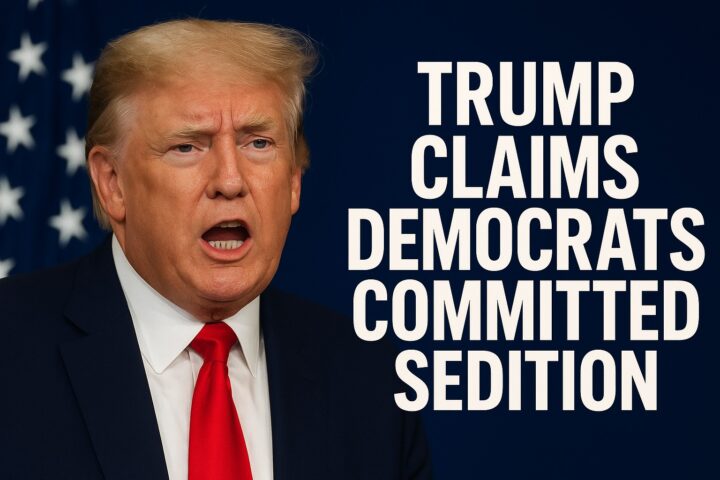
Trump Iran war statement: When Donald Trump suggested that a war with Iran could last “around four weeks,” it sounded decisive. Clean. Almost efficient.
In politics, certainty sells.
But in geopolitics, certainty has a habit of collapsing under its own weight.
The idea of a four-week war feels reassuring. It implies control a beginning, a middle, and a clear end.
It suggests a calculated strike, strategic dominance, and a quick return to stability.
But history rarely respects political timelines.
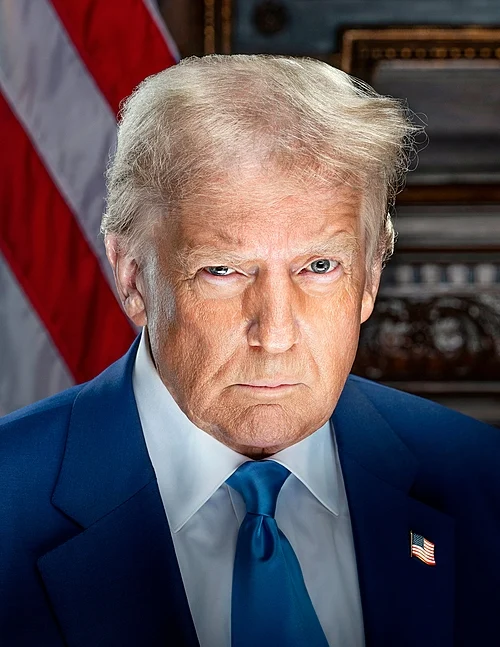
History Rarely Follows Political Timelines
Wars, especially in the Middle East, have a way of stretching beyond predictions.
The 2003 invasion of Iraq was widely framed as a swift operation.
Baghdad fell quickly, yes but what followed was years of insurgency, sectarian violence, and a prolonged American presence that reshaped the region in ways no initial war plan anticipated.
Afghanistan was expected to be a focused counterterrorism mission after 9/11.
It became America’s longest war, lasting two decades.
Military Strength vs. Modern Warfare Reality
Timelines in war are often based on military capability: air superiority, missile range, troop strength, technological edge.
By those metrics, the United States holds significant advantages.
But modern conflict isn’t fought solely on conventional battlefields anymore.
Iran is not an isolated state waiting for invasion.
It is a regional power with asymmetric capabilities missile systems, cyber operations, naval influence in the Persian Gulf, and relationships with proxy groups across Iraq, Syria, Lebanon, and Yemen.
A direct confrontation would not unfold in a vacuum. It would ripple outward
The Strait of Hormuz and the global economic shockwave
One of the most immediate consequences would likely be economic.
Nearly a fifth of the world’s oil passes through the Strait of Hormuz.
Even the threat of disruption in that narrow stretch of water can spike global oil prices overnight.
Markets react not just to action, but to fear.
A few weeks of military escalation could mean months — or years — of economic aftershocks for countries far removed from the battlefield.
The Human Cost Beyond the Battlefield
And then there is the human factor, which never fits into neat projections.
Civilian displacement, infrastructure damage, retaliatory strikes — these don’t resolve themselves on a four-week clock.
Even if major combat operations end quickly, instability often lingers. Power vacuums create new actors.
Regional tensions harden. Reconstruction becomes a generational project.
Short Wars, Long Consequences
It’s also worth remembering that “short wars” can still have long memories.
The 1991 Gulf War lasted just over a month in its active combat phase.
Yet its consequences — sanctions, regional instability, unresolved tensions — shaped Middle Eastern politics for decades. Duration alone doesn’t determine impact.
Political leaders sometimes frame conflicts in concise timelines for domestic audiences.
It signals confidence and preparedness. It reassures markets and voters.
But wars are dynamic, Opponents adapt., Alliances shift. Objectives evolve mid-conflict.
What begins as a targeted strike can escalate in response to retaliation or miscalculation.
There’s also the question of global reaction.
A confrontation between the United States and Iran would not occur in isolation from other powers.
Russia and China have strategic interests in the region.
European nations remain deeply invested in nuclear diplomacy efforts.
Any prolonged escalation could complicate already fragile international relationships.
Perhaps the deeper issue isn’t whether a war could technically last four weeks.
Militarily, intense campaigns can be brief.
The question is what comes after those four weeks.
Does deterrence hold? Do proxy networks stand down?
Do energy markets stabilize? Does diplomacy re-emerge stronger or collapse entirely?
History suggests that wars rarely end where leaders expect them to.
They evolve. They expand in unexpected directions.
And their consequences often outlive the administrations that initiate them.
The appeal of a short timeline is understandable.
In an era of rapid news cycles and political polarization, clarity feels powerful.
But clarity can sometimes oversimplify.
If anything, history teaches caution.
It reminds us that conflicts involving deeply rooted rivalries, regional alliances, and global economic stakes are rarely confined to the window first predicted.
Four weeks might describe an initial phase of military action.
It cannot capture the political, economic, and human reverberations that follow.
War is not a calendar event. It is a chain reaction.
And history, time and again, has shown that once that chain begins, controlling its length is far more complicated than setting a date on paper
(Trump Iran war statement)